How Many Calories Should I Eat to Lose Weight? The Honest Answer
Written by DC Personal Trainer · 15 years experience · Private studio, Sale M33 4NQ
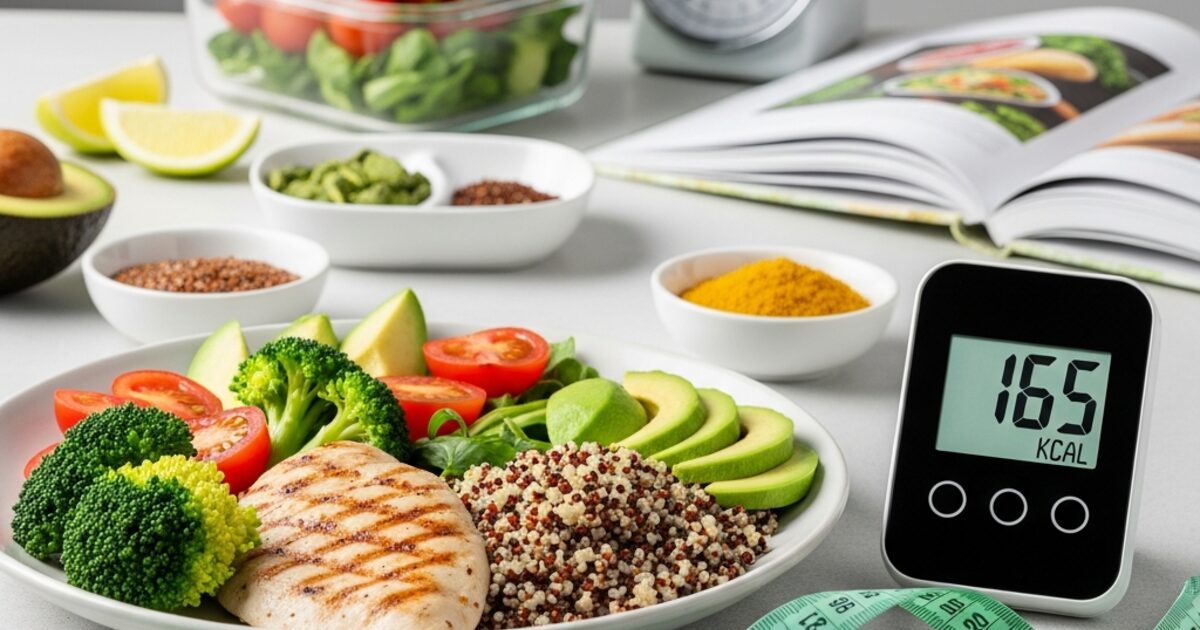
"How many calories should I eat to lose weight?" is one of the most common questions I get — and one of the most poorly answered online. Most articles either give a generic number that's wrong for most people, or bury the answer in so many caveats it becomes useless. Here is the clear, honest picture.
The One Principle Everything Else Depends On
Fat loss requires a calorie deficit — consuming fewer calories than your body expends. This is not up for debate. No diet plan, food group elimination, or supplement overrides this fundamental principle. The type of food you eat, your macronutrient split, your meal timing — these all matter for body composition, performance, and sustainability. But none of them produce fat loss without a calorie deficit underneath.
Calories In < Calories Out = Fat Loss
Everything else is detail. Important detail — but detail nonetheless.
Step 1: Find Your TDEE (Total Daily Energy Expenditure)
Your TDEE is the total number of calories your body burns in a day — including your resting metabolism, daily movement, exercise, and the energy used to digest food. This is your maintenance calorie level: eating at your TDEE keeps your weight stable.
TDEE is calculated in two steps:
Step 1a: Calculate Your Basal Metabolic Rate (BMR)
Your BMR is the calories your body burns at complete rest — just to keep you alive. The Mifflin-St Jeor equation is the most accurate widely-used formula:
For Women
BMR = 447.6 + (9.25 × kg) + (3.10 × cm) − (4.33 × age)
Example: 40-year-old woman, 65kg, 165cm
= 447.6 + 601.3 + 511.5 − 173.2 = 1,387 kcal
For Men
BMR = 88.4 + (13.4 × kg) + (4.8 × cm) − (5.68 × age)
Example: 45-year-old man, 85kg, 178cm
= 88.4 + 1,139 + 854.4 − 255.6 = 1,826 kcal
Step 1b: Multiply by Your Activity Level
Your BMR is then multiplied by an activity factor to account for your daily movement and exercise:
| Activity Level | Description | Multiplier |
|---|---|---|
| Sedentary | Desk job, little or no exercise | × 1.2 |
| Lightly active | Light exercise 1–3 days/week | × 1.375 |
| Moderately active | Moderate exercise 3–5 days/week | × 1.55 |
| Very active | Hard exercise 6–7 days/week | × 1.725 |
| Extremely active | Physical job + hard exercise daily | × 1.9 |
Your TDEE = BMR × Activity Multiplier. This is your estimated maintenance intake — the calories needed to keep your weight exactly where it is.
The most common mistake with activity levels
Most people overestimate their activity level. If you have a desk job and exercise 3 times a week, you're almost certainly "lightly active" — not "moderately active." Overestimating your TDEE by 200–300 calories is one of the primary reasons people think they're in a deficit but aren't.
Step 2: Set Your Calorie Deficit
Subtract 300–500 calories from your TDEE to get your daily target for fat loss:
−300 kcal/day
Mild deficit
~0.3kg/week loss
Easier to sustain
Less hunger
Best for athletes
−400–500 kcal/day
Recommended sweet spot
~0.5kg/week loss
Sustainable long-term
Preserves muscle
Most people's target
−750–1,000 kcal/day
Aggressive deficit
~0.75–1kg/week loss
Higher muscle loss risk
Hard to maintain
Not recommended long-term
Real-World Examples
| Person | Est. TDEE | Fat Loss Target | Expected Rate |
|---|---|---|---|
| Woman, 40, 65kg, lightly active | ~1,907 kcal | ~1,500 kcal | ~0.5kg/week |
| Man, 45, 90kg, lightly active | ~2,535 kcal | ~2,000 kcal | ~0.7kg/week |
| Woman, 35, 75kg, moderately active | ~2,323 kcal | ~1,850 kcal | ~0.6kg/week |
| Man, 50, 80kg, sedentary | ~2,100 kcal | ~1,650 kcal | ~0.5kg/week |
The Protein Priority: Don't Just Cut Calories
Hitting a calorie target without prioritising protein is one of the most common fat loss mistakes. When you're in a calorie deficit, your body draws on both fat and muscle for energy. High protein intake protects your muscle mass — so you lose fat, not lean tissue.
Target: 1.8–2.2g of protein per kg of bodyweight daily.
Why protein matters so much in a deficit
- Preserves lean muscle — you lose fat, not strength
- More satiating than carbs or fat — reduces hunger significantly
- Higher thermic effect — burns ~25% of its own calories in digestion
- Supports muscle repair and growth alongside strength training
Why Most People Aren't Actually in a Deficit
If you've "been counting calories" and not losing weight, the most likely culprit is tracking accuracy. Research consistently shows that people underreport calorie intake by 30–50%. The reasons are predictable:
Common calorie tracking errors
- Not weighing food — estimating portions is almost always inaccurate, typically low
- Forgetting cooking oils — a tablespoon of olive oil is ~120 calories and easy to miss
- Drinks and sauces — milk in tea, salad dressings, condiments add up fast
- Tasting while cooking — a few bites can be 100–200 calories unlogged
- Weekend eating — tracking Monday–Friday but eating freely at weekends eliminates the weekly deficit
How Long Until You See Results?
| Timeframe | What to Expect |
|---|---|
| Week 1–2 | Scale weight drops quickly (mostly water and glycogen, not fat) |
| Week 2–4 | Actual fat loss begins; 0.5–1kg per week at a correct deficit |
| Month 2–3 | Visible body composition changes; clothes noticeably looser |
| Month 3–6 | Significant transformation; adjust calories down slightly as weight falls |
Adjust as you lose weight
As your bodyweight drops, your TDEE decreases — you burn fewer calories at a lower weight. Every 5–8kg of weight loss, recalculate your TDEE and adjust your calorie target accordingly. Failing to do this is why many people plateau after an initial period of progress.
Do You Need to Count Calories Forever?
No — and for most people, long-term tracking isn't necessary or sustainable. The purpose of tracking is to build accurate awareness of your intake. After 8–12 weeks of consistent tracking, most people develop a clear intuitive sense of portion sizes and calorie content that makes rigid tracking unnecessary. The goal is understanding, not lifelong data entry.
Many clients I work with track for 3 months, establish their habits and awareness, and then maintain their results without ongoing tracking. Others prefer to track periodically — every few months — to keep their intake calibrated. Both approaches work.
Putting It Together: A Simple Framework
- 1Calculate your BMR using the Mifflin-St Jeor formula above
- 2Multiply by your honest activity level to get your TDEE
- 3Subtract 400–500 calories for your daily fat loss target
- 4Set your protein target: 1.8–2.2g per kg of bodyweight
- 5Fill remaining calories with carbohydrates and fats in whatever split you prefer
- 6Track accurately for at least 4 weeks before drawing conclusions
- 7Recalculate every 5–8kg of weight loss and adjust target accordingly
Knowing the theory and applying it consistently are two different things. I work with clients in Sale, Altrincham, Hale, and surrounding areas to combine the right training programme with practical nutrition guidance — so you're not guessing at calorie targets or wondering why the scales won't move.
- Personalised calorie and protein targets set at your consultation
- Strength training programme to preserve muscle during fat loss
- Private studio, Sale M33 4NQ — £45/session, no contract
Ready to Stop Guessing and Start Seeing Results?
Book a free consultation at the studio in Sale M33. We'll work out your calorie target, protein needs, and the training approach that makes the most sense for your body and goals.