Perimenopause Fitness in Hale & Bowdon: What Actually Helps
Perimenopause brings a set of physical changes that make standard fitness advice largely useless. Hot flushes, sleep disruption, midline weight gain, low mood — these aren't just nuisances, they're physiological shifts that require a different approach to exercise and nutrition. This guide covers what the evidence actually says, specifically for women in Hale WA15 and Bowdon WA14 looking for practical answers.
What Changes During Perimenopause — and Why It Affects Exercise
Perimenopause typically begins in the mid-to-late 40s and can last 4–10 years. Oestrogen levels become unpredictable before declining, which triggers a cascade of changes:
These changes mean that the same diet and exercise that maintained your weight and fitness in your 30s will not maintain them in your mid-to-late 40s. This is not a willpower problem — it's a physiology problem that requires a physiology-based solution.
How Exercise Affects Each Perimenopause Symptom
Hot flushes
Reduced frequency and severity with regular strength + cardio training (8–12 weeks)
Poor sleep / night sweats
Strength training improves sleep architecture; timing matters (avoid intense training within 3 hrs of bed)
Midsection weight gain
Strength training rebuilds metabolic rate; protein targets prevent muscle loss during fat loss
Low mood / anxiety
Consistent exercise — particularly strength training — has well-documented antidepressant effects independent of weight loss
Reduced bone density
Weight-bearing strength training is the most effective non-pharmaceutical intervention for maintaining bone density
Fatigue and low energy
Counterintuitively, regular training (not rest) increases energy levels — usually noticeable within 3–4 weeks
The Right Approach: Strength First
The most common mistake perimenopausal women make is increasing cardio when they notice weight gain. More running or cycling in a calorie deficit accelerates muscle loss alongside fat — which lowers resting metabolism further and makes the problem worse over time.
The evidence-based approach is:
This combination consistently produces results — fat loss, increased energy, better sleep, and reduced hot flush frequency — within 8–12 weeks of consistent application.
What a Session Looks Like
Perimenopausal clients don't need a different category of exercise — they need the same evidence-based approach as anyone else, with some specific considerations:
Session intensity adjusts to how you feel
Hormonal fluctuations mean energy varies significantly week to week. On lower-energy days, volume drops — the session still happens.
Bone-loading exercises are prioritised
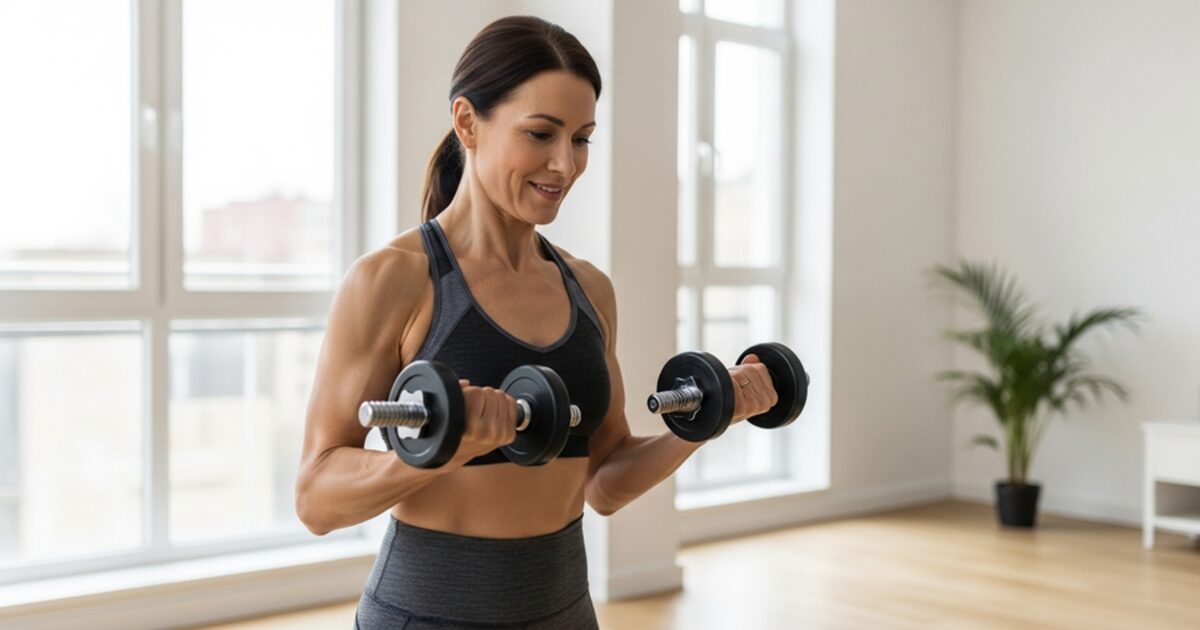
Compound barbell and dumbbell movements create mechanical stress on bone tissue, which is the primary stimulus for maintaining bone density.
Recovery is treated as training
Protein timing, sleep habits, and stress management are discussed and tracked alongside training load.
No 'lady weights'
Women in perimenopause need meaningful resistance — not pink dumbbells. Progressive overload is what drives adaptation.
Private Studio in Sale M33 — 10–15 Min from Hale & Bowdon
Fully private studio at 15 Newgate Road, Sale M33 4NQ. Home personal training in Hale WA15 and Bowdon WA14 also available at £45/session. Free consultation included — no commitment required.
Frequently Asked Questions
What type of exercise is best during perimenopause?
Strength training is the single most evidence-supported form of exercise for perimenopausal women. It preserves lean muscle (which declines as oestrogen falls), maintains bone density (critical as fracture risk rises), improves insulin sensitivity, supports mood and sleep, and produces body composition changes that cardio alone cannot deliver. A good starting programme is 2–3 strength sessions per week, combined with daily walking (7,000–10,000 steps). Cardio can complement this but should not replace strength training.
Can exercise reduce perimenopause hot flushes?
Yes. Research shows that regular exercise — particularly strength training combined with moderate cardiovascular activity — reduces the frequency and severity of hot flushes in perimenopausal women. The mechanism involves improvements in thermoregulation and the reduction of systemic inflammation. Results are not immediate (typically 8–12 weeks of consistent training), but the evidence is strong enough that exercise is now recommended as a first-line intervention for hot flush management alongside or before HRT in many clinical guidelines.
Why am I gaining weight around my middle in perimenopause despite eating the same?
This is a very common experience and it has a clear physiological explanation. As oestrogen declines, the body preferentially stores fat in the abdominal area. Simultaneously, muscle mass declines (which lowers resting metabolism), and insulin sensitivity often worsens (making the body more efficient at storing carbohydrates as fat). Eating the same as before results in a net calorie surplus even though nothing has changed in your diet. The solution involves strength training to rebuild metabolic rate, a modest calorie adjustment, and a significant increase in protein intake.
Is it too late to start exercising in my 40s or 50s during perimenopause?
No — it is never too late, and this is one of the most important times to start. Women who begin strength training during perimenopause show measurable improvements in bone density, muscle mass, metabolic rate, and cardiovascular health within 12–16 weeks. The adaptations are just as real as those seen in younger women — they may take slightly longer, but they are equally significant. Starting now rather than 'when things settle down' is always the right decision.
Is there a personal trainer in Hale who specialises in women's fitness and perimenopause?
DC Personal Trainer works with a number of perimenopausal and postmenopausal clients from Hale WA15, Bowdon WA14, and Altrincham WA14. Sessions are at the private studio in Sale M33 (10–15 minutes from Hale) or at your home in Hale. The approach is evidence-based and takes hormonal changes into account in both programme design and nutrition guidance.