How to Choose a Personal Trainer in Manchester: 10 Questions to Ask First
By DC Personal Trainer · Master PT · 15 years, 20,000+ sessions
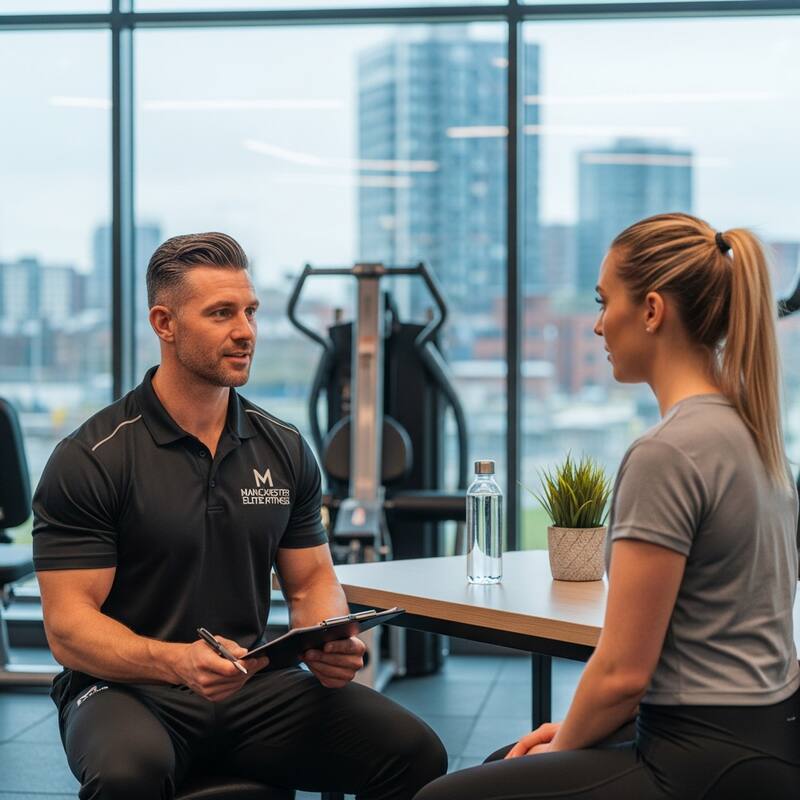
Manchester has hundreds of personal trainers. Choosing the wrong one can mean wasted money, slow progress, and in the worst cases, injury. Choosing the right one can change your health and body in ways you didn't think were possible. This guide gives you exactly what to look for.
Why Choosing Carefully Matters
Not all personal trainers are equal. The barrier to entry in the UK personal training industry is relatively low — a Level 3 certificate can be achieved in a few weeks online. The difference between a newly qualified trainer and one with a decade of full-time client experience is significant. Your investment of time, money, and trust deserves careful due diligence.
The 10 Questions to Ask Before Booking
Red Flags: Walk Away If You See These
What Separates an Average PT from an Exceptional One
After 15 years in this industry, here's what I've seen separate the trainers who consistently deliver results from those who don't:
- They listen first: An exceptional PT spends the majority of your first meeting asking questions, not talking. Understanding you — your history, lifestyle, limitations, what's failed before — comes before any programming.
- They explain the why: Every exercise in a well-designed programme has a reason. A good PT can explain concisely why they're choosing specific movements for your goals.
- They adapt continuously: Your body changes. Life changes. A great PT adjusts the programme as you progress — not just runs the same plan for 6 months.
- They hold you accountable without shaming: Accountability is one of the key reasons personal training works. The best PTs create an environment where missing a session feels like a disappointment, not a punishment.
- They have long-term clients: Clients who return for years are the strongest signal of quality. Short-term results are easy to manufacture; long-term client retention means consistent delivery.
Private Studio vs Commercial Gym PT: What's the Difference?
Many personal trainers in Manchester operate out of commercial gyms where they rent floor space or pay the gym a percentage of their session fees. An alternative — and increasingly popular option — is the private PT studio: a fully-equipped facility used exclusively for one-to-one training.
- ✓ No other members during your session
- ✓ No waiting for equipment
- ✓ Complete privacy
- ✓ Trainer has designed the space for 1-to-1
- ✓ Distraction-free environment
- ✓ Potentially wide equipment selection
- ✗ Shared with other gym members
- ✗ May need to queue for equipment
- ✗ PT pays gym fee — passed to client
- ✗ Distractions, noise, social pressure
Always book a free initial consultation first
Any reputable personal trainer in Manchester should offer a free no-obligation consultation before you commit money. Use this to assess their communication, approach, and whether their personality suits yours. If a trainer won't offer this, move on.
Ready to Meet Your Personal Trainer?
Book a free, no-obligation consultation at my private studio in Sale M33 — serving clients from across South Manchester including Altrincham, Hale, Bowdon, and Stretford.